As you may have read in my Women in Agriculture post, I worked on a local dairy during most of my high school career. This was my first job and one of the most character-building experiences of my life thus far. When I started out, I was just a beef girl that had minimal dairy knowledge. By the time I had to quit the dairy to move to college, I had a little place in my heart for the dairy industry and an increased knowledge of how it worked. I learned so much in those 3 years that I wouldn’t have learned anywhere off the farm.
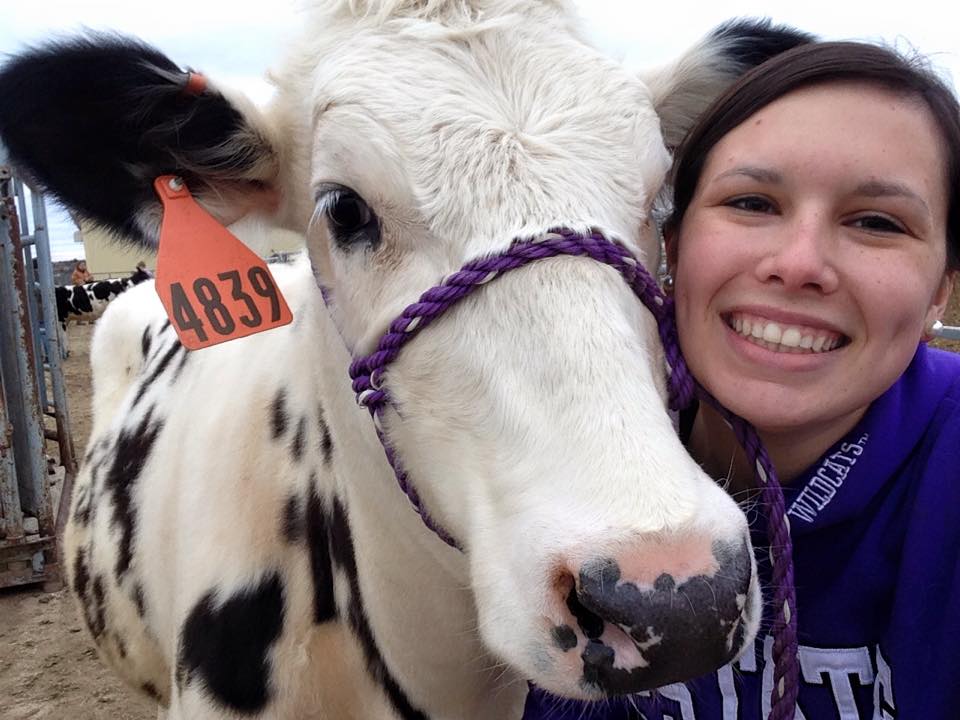
In the heart of Virginia lies Eastview Farm, a ~120 milking cow operation that runs Holsteins. That seems small, but I was the only non-familial person of 5 employees on the farm. The operation was started by my boss’s grandfather, who handed it down to his son, who in turn will one day completely turn the reins over to his son, who was my boss. Eastview is a true family farm, and one that can be admired from the outside as well as the inside. I was responsible for the care of sometimes up to 30 individual calves, and ~80 older heifers. The calves were the most work; I would get to the farm around 6 a.m., mix up to 15 gallons of powdered milk into liquid form, divide up the milk into bottles or buckets based on each individual calf’s needs, and then distribute the milk to the hungry calves. Once everyone got their breakfast, it was time to make rounds with the grain bucket, making sure each calf had their share of grain to get them moving towards weaning. I did the same with the water hose, ensuring that the calves had plenty of fresh, clean water to last them through the day. During the process of feeding, I would look at each calf and do a quick visual assessment of their health. I could notice pretty quickly whether or not the calves felt sick by the smell or look of their feces, how they were acting, and their body condition. If I noticed a problem, I let my boss know immediately so that he could assess the situation and take further action, if needed. If we determined a calf was sick, depending on the sickness, we let them be for a few days and if there was no improvement, medicine was administered. Antibiotics were given to the sick calves just as they would be given to a sick child; in a certain amount, a certain number of times, and over-seen by a knowledgeable professional. Once the younger calves were taken care of, I went back into the milk room and thoroughly washed all of the bottles, buckets, and equipment used to mix the milk and put them away to dry. This could be a lengthy process in and of itself, but it was of high importance. I used a special soap to make sure any trace of illness was washed away so as not to be transferred from calf to calf. After completing the washing routine, I would head back out and fill up 5-gallon buckets with grain to haul down to the heifer barn. There, I would throw hay to the older heifers and distribute the grain, all the while doing a visual health check on them as well. Finally, my chores were done. That is, until I had to be back at 5 that evening to do it all over again
Here’s a quick run down of a typical day at the dairy. The milking would start around 2:30 a.m. (yes, that time comes around twice a day) and lasted until around 7 or 7:30, depending on the number of cows being milked. The calves would be fed starting around 6:30 and lasted an hour to two hours. Once milking was over, the parlor would be cleaned out and sanitized to prep for the next milking that would start around 3:00 p.m. After each milking, one of the guys would jump on the skidsteer and clean out the barn. Chores between milkings varied depending on what needed to be done. Like most dairy farms, Eastview grew their own corn to chop for silage, soybeans, and also cut and stored hay, so that took up quite a fair amount of time. Other chores included mending fences, fixing machinery, conducting herd checks, or any other odd jobs that might come up. I was usually only there for the 2 hours it took to feed calves, but some days I’d get really lucky (not) and get to scrub down the parlor and milk room which took about 4 hours itself. That was not a fun job, but it needed to be done, and seeing the parlor sparkling clean was nice while it lasted. I also got the lovely task of keeping the grass cut around the parlor and calf hutches one summer. Can you say H-O-T, and not in the good way! But, I got it done and it was a character-building experience. During the winter, a friend of mine that also sometimes filled in for me at the dairy and milked over the summer once would come out to the dairy and we would clip all of the milking cows. In January. It was always entertaining, that’s for sure. Bundled up in layers upon layers of clothing, we trudged our way out to the barn and fired up the clippers. One of us would push the cows in from the holding pen – not always as easy as it sounds – and catch her in the headgate. Then, we would clip away, removing the hair from her udder, rear legs, and tail, to make milking easier and to keep the cow cleaner. By the end of the day, Erin and I were covered head to toe in cow hair and usually left with a bruise or two from an ungrateful cow. I kid you not, I pulled out a pair of leggings I wore UNDER jeans and a pair of coveralls to clip in a few months later, in Kansas, and STILL found hair inside of them. I like to say it’s because Eastview loves me so much. But, back to the main focus here.
One of my biggest pet peeves is the accusation that farmers and ranchers don’t care about their livestock. My boss and the rest of the employees at Eastview were more passionate about their work than many of the people I know. The saying “married to the dairy” rings quite true. There were some very cold 5° December mornings and some very hot 100° July evenings, but no matter how many or how few clothes I had to wear, I was there making sure the calves were cared for and warm/cool enough (not to mention what everyone else at the farm went through and did on the days I didn’t work or before I even got in). When I first started working at the dairy, there was a calf that was premature and sickly, and in the hot, humid September days she struggled a little. We ran an extension cord from the lean-to to her hutch and ran a fan on her constantly to keep her temperature down and kept cool, fresh water in front of her. During the winter, we kept “calf coats” on the smaller calves that wouldn’t be able to keep their own internal heat up. It was such a reward to see the calves get through the seasons and stay healthy and most importantly, alive. I was always there busting iced over buckets, which took a solid extra 45 minutes standing out in the cold or scrubbing the algae out of the large water troughs in the extreme heat (but farmers don’t care about their animals).
Life lessons were a huge part of working on the farm. Though we rarely lost a calf, it was a tough pill to swallow on the occasion that we did. It was heartbreaking to work so hard to pull a calf or help a cow through a tough delivery only to lose the calf. But, when we worked hard and delivered a calf that was healthy, everything was so worth it. There was one instance where there were 4 of us helping to pull an extremely big calf and when we finally got him out he wasn’t breathing. So, my boss cleared out his nose and throat and did a form of CPR while I moved the calf’s legs around to get his blood flowing. We tried every trick in the book to get the calf breathing again. Lo and behold, we were able to resuscitate the calf. I’ve never felt anything like that before – saving a calf that would’ve been dead if we hadn’t stepped in.
The bottom line is that, despite what animal rights activists may try to make you believe, livestock producers care very deeply for their animals and do everything in their power to keep them healthy and happy. Dairymen (and women) are some of the tightest-knit, hardest working, honest-to-God group of people I’ve ever had the privilege of working with and knowing. If you have questions about anything that goes on in the dairy industry, please don’t hesitate to reach out and ask a local farmer, or get in touch with me to get your questions answered.


 Rachel Waggie
What a joy it is to see you growing in knowledge and passion for the work you are doing and the lessons you are learning.
LikeLike
Enjoyed reading this. Great job working on the farm AND writing the article. LOVE the photo at the end. ❤
LikeLike
I wrote the above. It’s GiGi, NOT Anonymous. Hehe. I clicked too quickly.
LikeLike
Awesome!!
LikeLike